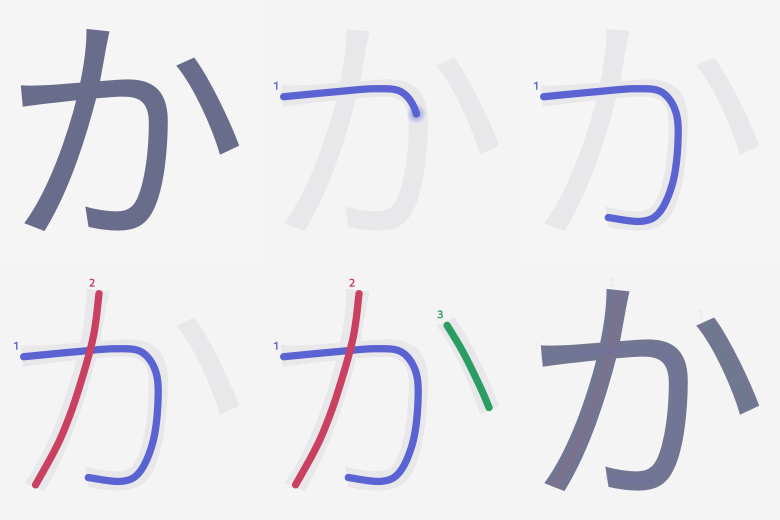
か (ka)
Cách phát âm
Ký tự か đại diện cho âm tiết 'ka', âm 'k' cứng theo sau bởi 'a' như trong 'father'. Đây là ký tự đầu tiên của hàng か và được sử dụng rộng rãi trong từ vựng tiếng Nhật hàng ngày. Âm 'k' không bật hơi — nhẹ hơn 'k' trong tiếng Anh.
Hướng dẫn từng nét
か được viết bằng ba nét. Nét 1: một đường ngang cong ở phía trên, quét từ trên bên trái xuống dưới bên phải với một móc nhỏ ở cuối. Nét 2: một đường thẳng đứng cong dài đi xuyên qua nét đầu tiên và uốn xuống bên trái ở dưới đáy. Nét 3: một nét ngắn tách rời ở phía trên bên phải, giống như một dấu phẩy nhỏ — điều này tạo cho か điểm nhấn đặc trưng.
Từ thông dụng có か
- てがかり (tegakari) — manh mối
- かわいそう (kawaisou) — tội nghiệp
- いつか (itsuka) — ngày 5
- とおか (tooka) — ngày 10
- ここのか (kokonoka) — ngày 9
- なかなか (nakanaka) — khá / rất
- なのか (nanoka) — ngày 7
- ふつか (futsuka) — ngày 2
- みっか (mikka) — ngày 3
- むいか (muika) — ngày 6
- ようか (youka) — ngày 8
- よっか (yokka) — ngày 4
- かおつき (kaotsuki) — nét mặt
- ちかづく (chikazuku) — tiếp cận
- でかける (dekakeru) — đi ra ngoài
- わかる (wakaru) — hiểu
- さかな (sakana) — cá
- はつか (hatsuka) — ngày 20
- あかり (akari) — ánh sáng
- かたまり (katamari) — cục / khối
How to Write か (ka) in Hiragana
The hiragana character か is romanized as "ka" and is written with 3 strokes. Like "ka" in "car". Example word: かさ (kasa) — umbrella.
Stroke Order for か
When writing か, follow the numbered stroke order shown in the reference character above. Japanese characters are generally written from left to right and top to bottom. Correct stroke order improves readability and writing speed.
Practice Tips
- Print this sheet on standard 8.5" × 11" letter paper
- Start by tracing the light grey guide characters in the first column
- Then practice writing か freehand in the empty squares
- Pay attention to stroke direction and order — follow the numbered guide
- For interactive practice with animations, visit the main study page
About Hiragana
Hiragana is one of the three Japanese writing systems. It consists of 46 basic characters, each representing a syllable. Hiragana is used for native Japanese words, grammar particles, and verb endings. Learning correct stroke order is essential for proper Japanese handwriting.