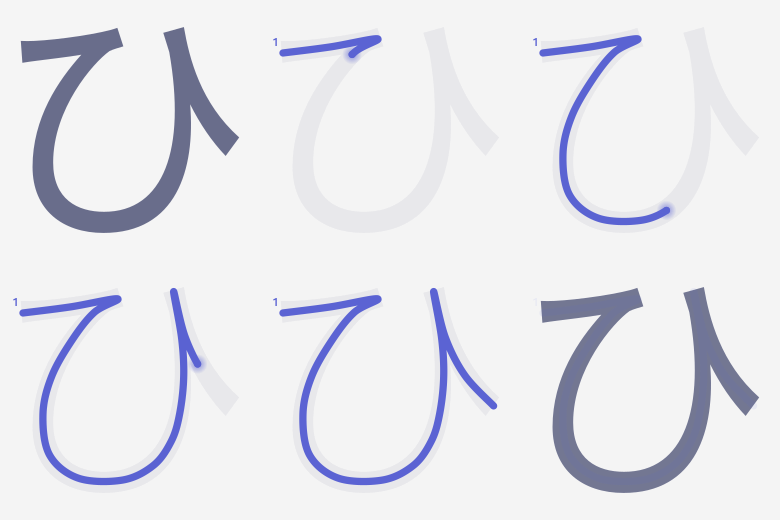
ひ (hi)
Pagbigkas
Ang karakter na ひ ay kumakatawan sa pantig na 'hi', isang malambot na 'h' na sinusundan ng 'i'. Bahagi ng は-row. Sa mabilis na pagsasalita, ang 'h' bago ang 'i' ay maaaring marinig na bahagyang mas mahangin kaysa 'h' sa Ingles.
Gabay sa Bawat Guhit
Ang ひ ay isinusulat sa iisang guhit. Magsimula sa kaliwa-itaas na may maikling pababang guhit, pagkatapos ay sumuyod pababa at pakanan sa mahabang nakakurbang linya na umaarko sa ibaba ng karakter, sa wakas ay umaakyat patungong kanang-itaas at nagtatapos sa maliit na kawit. Ang hugis ay parang ngiti o mababaw na mangkok.
Mga Karaniwang Salita na may ひ
- ひゃく (hyaku) — isandaan
- ひとり (hitori) — isang tao / mag-isa
- ひとりごと (hitorigoto) — pakikipag-usap sa sarili
- ひ (hi) — araw
- ひがし (higashi) — silangan
- ひつじ (hitsuji) — tupa
- ひとみ (hitomi) — balintataw
- ひま (hima) — libreng oras
- てのひら (tenohira) — palad
- ひかり (hikari) — liwanag
- ひだり (hidari) — kaliwa
- ひる (hiru) — tanghali
- ひょう (hyou) — boto / balota
- ひざ (hiza) — tuhod
- ひと (hito) — tao
- ひん (hin) — pagiging marangal / kagandahang-asal
- あさひ (asahi) — sikat ng araw sa umaga
- ずいひつ (zuihitsu) — sanaysay
- ぜひ (zehi) — siguradong-sigurado
- たいひ (taihi) — pagkakaiba / pagkukumpara
How to Write ひ (hi) in Hiragana
The hiragana character ひ is romanized as "hi" and is written with 1 stroke. Like "hee" in "heat". Example word: ひと (hito) — person.
Stroke Order for ひ
When writing ひ, follow the numbered stroke order shown in the reference character above. Japanese characters are generally written from left to right and top to bottom. Correct stroke order improves readability and writing speed.
Practice Tips
- Print this sheet on standard 8.5" × 11" letter paper
- Start by tracing the light grey guide characters in the first column
- Then practice writing ひ freehand in the empty squares
- Pay attention to stroke direction and order — follow the numbered guide
- For interactive practice with animations, visit the main study page
About Hiragana
Hiragana is one of the three Japanese writing systems. It consists of 46 basic characters, each representing a syllable. Hiragana is used for native Japanese words, grammar particles, and verb endings. Learning correct stroke order is essential for proper Japanese handwriting.