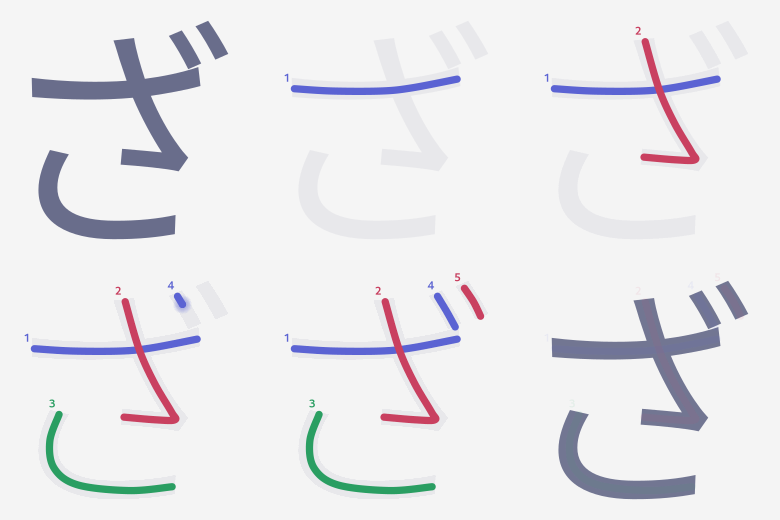
ざ (za)
การออกเสียง
ตัวอักษร ざ แทนพยางค์ 'za' เสียง 'z' นุ่มตามด้วย 'a' เหมือนใน 'father' เป็นตัว さ ที่มีดะคุเต็ง — เครื่องหมายเล็ก ๆ สองอันที่มุมขวาบนซึ่งทำให้พยัญชนะจาก 's' กลายเป็นเสียงก้อง 'z' เสียง 'z' ของญี่ปุ่นคล้ายกับภาษาอังกฤษแต่ฟังดูสั่นเสียงน้อยกว่าเล็กน้อย
คู่มือลำดับขีด
ざ เขียนด้วยห้าขีด สามขีดแรกเหมือนกับ さ (เส้นแนวนอนด้านบน เส้นแนวตั้งโค้งยาว และหางม้วนเล็ก ๆ ที่แยกออกมาด้านขวาล่าง) จากนั้นเพิ่มดะคุเต็ง: ขีดที่ 4: เครื่องหมายทแยงเล็ก ๆ ที่ด้านขวาบนของตัวอักษร ขีดที่ 5: เครื่องหมายทแยงเล็ก ๆ ที่สองใต้หรือทางขวาของอันแรก เครื่องหมายทั้งสองรวมกันทำให้พยางค์เปลี่ยนจาก 'sa' เป็น 'za'
คำที่พบบ่อยที่มี ざ
- こころざし (kokorozashi) — ความตั้งใจ / ปณิธาน
- わざ (waza) — เทคนิค / ฝีมือ
- ひざ (hiza) — หัวเข่า
- けいざい (keizai) — เศรษฐกิจ
- ざしき (zashiki) — ห้องเสื่อทาทามิ
- ざせき (zaseki) — ที่นั่ง
- そくざ (sokuza) — ทันที
- そざい (sozai) — วัสดุ / วัตถุดิบ
- ざっし (zasshi) — นิตยสาร
- じつざい (jitsuzai) — การมีอยู่จริง
- ふくざつ (fukuzatsu) — ซับซ้อน
- ざいばつ (zaibatsu) — กลุ่มทุน (ไซบัตสึ)
- きざむ (kizamu) — หั่นละเอียด / สลัก
- さまざま (samazama) — หลากหลาย
- ざいもく (zaimoku) — ไม้ / วัสดุไม้
- もくざい (mokuzai) — ไม้ (วัสดุ)
- ゆうざい (yuuzai) — มีความผิด
- かざり (kazari) — การประดับ / เครื่องประดับ
- かざる (kazaru) — ประดับ / ตกแต่ง
- はいざら (haizara) — ที่เขี่ยบุหรี่
How to Write ざ (za) in Hiragana
The hiragana character ざ is romanized as "za" and is written with 5 strokes. Like "za" in "pizza". Example word: ざっし (zasshi) — magazine.
Stroke Order for ざ
When writing ざ, follow the numbered stroke order shown in the reference character above. Japanese characters are generally written from left to right and top to bottom. Correct stroke order improves readability and writing speed.
Practice Tips
- Print this sheet on standard 8.5" × 11" letter paper
- Start by tracing the light grey guide characters in the first column
- Then practice writing ざ freehand in the empty squares
- Pay attention to stroke direction and order — follow the numbered guide
- For interactive practice with animations, visit the main study page
About Hiragana
Hiragana is one of the three Japanese writing systems. It consists of 46 basic characters, each representing a syllable. Hiragana is used for native Japanese words, grammar particles, and verb endings. Learning correct stroke order is essential for proper Japanese handwriting.