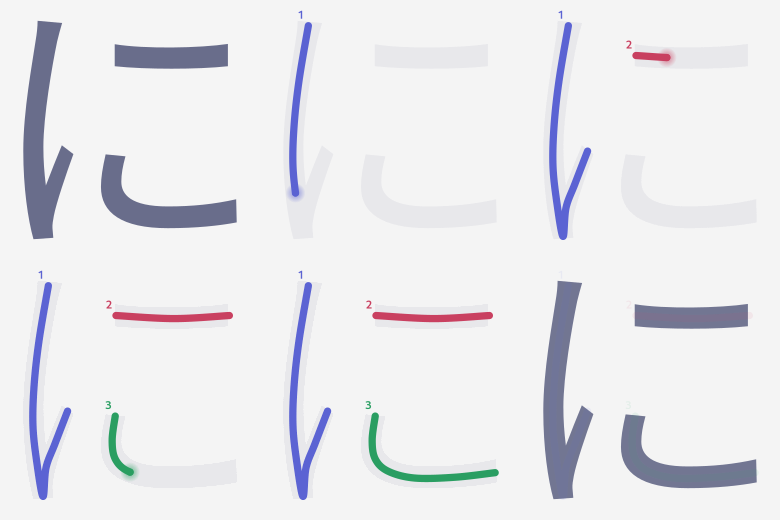
に (ni)
การออกเสียง
ตัวอักษร に แทนพยางค์ 'ni' เสียง 'n' นุ่มตามด้วย 'i' เป็นส่วนหนึ่งของแถว な คำช่วย に ('ที่' 'ใน' 'ไปยัง') เป็นหนึ่งในคำที่พบบ่อยที่สุดในภาษาญี่ปุ่น
คู่มือลำดับขีด
に เขียนด้วยสามขีด ขีดที่ 1: เส้นแนวตั้งสั้น ๆ ด้านซ้าย เอียงเล็กน้อย ขีดที่ 2: เส้นแนวนอนสั้น ๆ ด้านขวา ใกล้ด้านบน ขีดที่ 3: เส้นแนวนอนที่ยาวกว่าด้านขวา ใกล้ด้านล่าง ขนานกับขีดที่ 2 ตัวอักษรมีโครงสร้างสองส่วนสมดุล: เส้นแนวตั้งสั้นด้านซ้าย เส้นแนวนอนขนานสองเส้นด้านขวา
คำที่พบบ่อยที่มี に
- いちにち (ichinichi) — หนึ่งวัน
- はじめに (hajimeni) — อันดับแรก
- におい (nioi) — กลิ่น
- あに (ani) — พี่ชาย
- おに (oni) — ยักษ์ / ปีศาจ
- くに (kuni) — ประเทศ
- たに (tani) — หุบเขา
- なに (nani) — อะไร
- に (ni) — สอง
- にく (niku) — เนื้อ
- にし (nishi) — ทิศตะวันตก
- にじ (niji) — รุ้ง
- にせ (nise) — ของปลอม
- にわ (niwa) — สวน / ลานบ้าน
- にわとり (niwatori) — ไก่
- かに (kani) — ปู
- すでに (sudeni) — แล้ว / เสร็จแล้ว
- つねに (tsuneni) — เสมอ
- とくに (tokuni) — โดยเฉพาะ
- にかい (nikai) — ชั้นสอง / ชั้นบน
How to Write に (ni) in Hiragana
The hiragana character に is romanized as "ni" and is written with 3 strokes. Like "nee" in "knee". Example word: にほん (nihon) — Japan.
Stroke Order for に
When writing に, follow the numbered stroke order shown in the reference character above. Japanese characters are generally written from left to right and top to bottom. Correct stroke order improves readability and writing speed.
Practice Tips
- Print this sheet on standard 8.5" × 11" letter paper
- Start by tracing the light grey guide characters in the first column
- Then practice writing に freehand in the empty squares
- Pay attention to stroke direction and order — follow the numbered guide
- For interactive practice with animations, visit the main study page
About Hiragana
Hiragana is one of the three Japanese writing systems. It consists of 46 basic characters, each representing a syllable. Hiragana is used for native Japanese words, grammar particles, and verb endings. Learning correct stroke order is essential for proper Japanese handwriting.