み (mi)
การออกเสียง
ตัวอักษร み แทนพยางค์ 'mi' เสียง 'm' นุ่มตามด้วย 'i' เป็นส่วนหนึ่งของแถว ま
คู่มือลำดับขีด
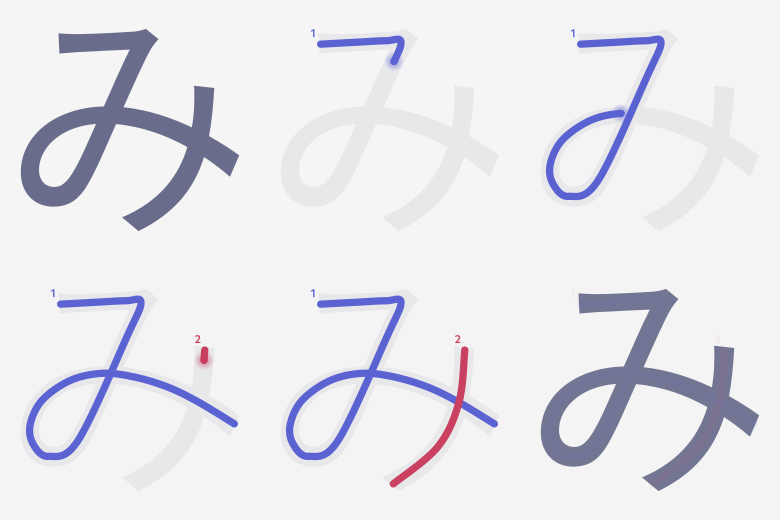
み เขียนด้วยสองขีด ขีดที่ 1: ขีดโค้งยาวที่เริ่มที่กลางบน ลงผ่านตัวอักษร และจบด้วยห่วงหรือตะขอเล็ก ๆ ที่กลางล่าง ขีดที่ 2: ขีดโค้งสั้น ๆ ด้านขวาที่ตัดผ่านส่วนล่างของขีดที่ 1 จบด้วยหางเล็ก ๆ ขึ้น ทั้งสองขีดประสานกันเป็นรูปทรงที่สมดุลและเกี่ยวเนื่องกัน
คำที่พบบ่อยที่มี み
- みる (miru) — ดู / มอง
- みっか (mikka) — วันที่ 3
- あみ (ami) — ตาข่าย / แห
- いずみ (izumi) — น้ำพุ / ตาน้ำ
- うみ (umi) — ทะเล
- かがみ (kagami) — กระจก
- かみ (kami) — เทพ / พระเจ้า
- すみ (sumi) — หมึกซูมิ (หมึกจีน)
- たたみ (tatami) — เสื่อทาทามิ
- つみ (tsumi) — อาชญากรรม / บาป
- とみ (tomi) — ความมั่งคั่ง
- なみ (nami) — ปานกลาง / ทั่วไป
- なみだ (namida) — น้ำตา
- ひとみ (hitomi) — รูม่านตา
- み (mi) — ร่างกาย / ตัวตน
- みき (miki) — ลำต้น (ไม้)
- みぎ (migi) — ขวา
- みさき (misaki) — แหลม
- みず (mizu) — น้ำ
- みずうみ (mizuumi) — ทะเลสาบ
How to Write み (mi) in Hiragana
The hiragana character み is romanized as "mi" and is written with 2 strokes. Like "mee" in "meet". Example word: みず (mizu) — water.
Stroke Order for み
When writing み, follow the numbered stroke order shown in the reference character above. Japanese characters are generally written from left to right and top to bottom. Correct stroke order improves readability and writing speed.
Practice Tips
- Print this sheet on standard 8.5" × 11" letter paper
- Start by tracing the light grey guide characters in the first column
- Then practice writing み freehand in the empty squares
- Pay attention to stroke direction and order — follow the numbered guide
- For interactive practice with animations, visit the main study page
About Hiragana
Hiragana is one of the three Japanese writing systems. It consists of 46 basic characters, each representing a syllable. Hiragana is used for native Japanese words, grammar particles, and verb endings. Learning correct stroke order is essential for proper Japanese handwriting.