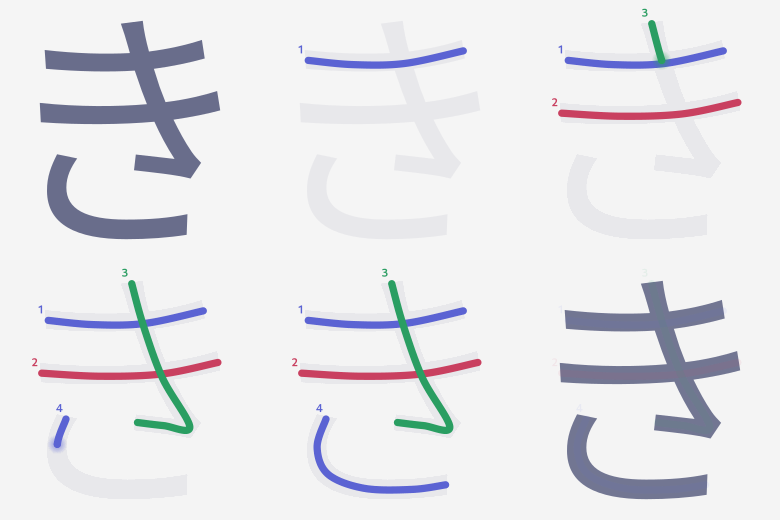
き (ki)
การออกเสียง
ตัวอักษร き แทนพยางค์ 'ki' เสียง 'k' หนักตามด้วย 'i' เหมือนใน 'machine' เป็นส่วนหนึ่งของแถว か เช่นเดียวกับตัวอักษรอื่นในแถวนี้ เสียง 'k' ไม่มีลมพ่นออกมา
คู่มือลำดับขีด
き เขียนด้วยสี่ขีด ขีดที่ 1: เส้นแนวนอนสั้น ๆ ใกล้ด้านบน เขียนจากซ้ายไปขวา ขีดที่ 2: เส้นแนวนอนที่ยาวกว่าใต้ขีดแรก ขนานกัน ขีดที่ 3: เส้นแนวตั้งยาวที่ตัดผ่านเส้นแนวนอนทั้งสอง เอียงเล็กน้อยไปทางซ้ายล่าง ขีดที่ 4: ขีดโค้งเล็ก ๆ ที่ด้านขวาล่างที่ม้วนกลับไปทางซ้าย — “หาง” อันเป็นเอกลักษณ์ของ き
คำที่พบบ่อยที่มี き
- きく (kiku) — ฟัง
- さきほど (sakihodo) — เมื่อสักครู่
- かおつき (kaotsuki) — สีหน้า
- きづく (kizuku) — สังเกตเห็น
- きずつける (kizutsukeru) — ทำให้บาดเจ็บ
- いきがい (ikigai) — เหตุผลในการมีชีวิต
- あき (aki) — ฤดูใบไม้ร่วง
- いき (iki) — ลมหายใจ
- えき (eki) — สถานี
- き (ki) — ต้นไม้
- くき (kuki) — ลำต้น
- げき (geki) — ละคร
- せき (seki) — ที่นั่ง
- きず (kizu) — แผล
- きた (kita) — ทิศเหนือ
- たき (taki) — น้ำตก
- てき (teki) — ศัตรู
- とき (toki) — เวลา
- きつね (kitsune) — จิ้งจอก
- きぬ (kinu) — ไหม
How to Write き (ki) in Hiragana
The hiragana character き is romanized as "ki" and is written with 4 strokes. Like "key". Example word: きもの (kimono) — kimono.
Stroke Order for き
When writing き, follow the numbered stroke order shown in the reference character above. Japanese characters are generally written from left to right and top to bottom. Correct stroke order improves readability and writing speed.
Practice Tips
- Print this sheet on standard 8.5" × 11" letter paper
- Start by tracing the light grey guide characters in the first column
- Then practice writing き freehand in the empty squares
- Pay attention to stroke direction and order — follow the numbered guide
- For interactive practice with animations, visit the main study page
About Hiragana
Hiragana is one of the three Japanese writing systems. It consists of 46 basic characters, each representing a syllable. Hiragana is used for native Japanese words, grammar particles, and verb endings. Learning correct stroke order is essential for proper Japanese handwriting.