が (ga)
การออกเสียง
ตัวอักษร が แทนพยางค์ 'ga' เสียง 'g' หนักตามด้วย 'a' เป็นตัว か ที่มีดะคุเต็ง — เครื่องหมายเล็ก ๆ สองอันที่มุมขวาบนซึ่งทำให้พยัญชนะจาก 'k' กลายเป็นเสียงก้อง 'g' ในบางภาษาถิ่นของญี่ปุ่น โดยเฉพาะภาษาโตเกียวเก่า が จะออกเสียงนาสิกเป็น 'ng' ที่นุ่มนวลกว่าเมื่ออยู่กลางคำ
คู่มือลำดับขีด
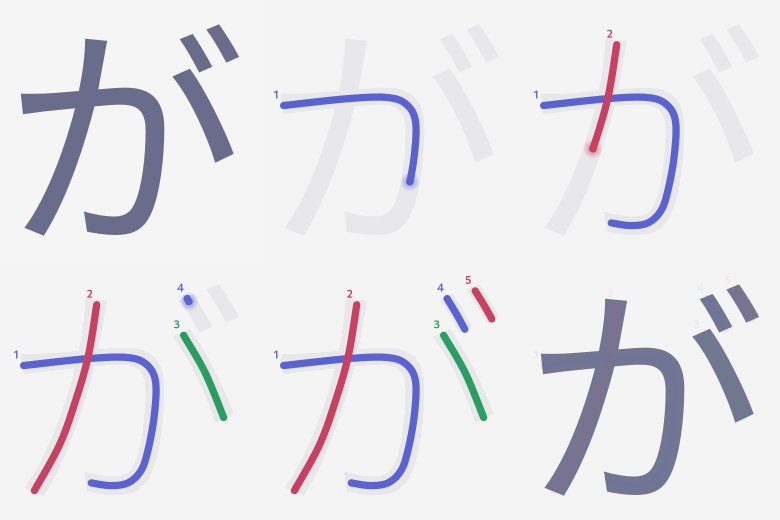
が เขียนด้วยห้าขีด สามขีดแรกเหมือนกับ か (แนวนอนโค้ง, แนวตั้งโค้งยาว, ลูกน้ำเล็ก ๆ ที่แยกออกมาด้านขวาบน) จากนั้นเพิ่มดะคุเต็ง: ขีดที่ 4: เครื่องหมายทแยงเล็ก ๆ ที่ด้านขวาบนของตัวอักษร ขีดที่ 5: เครื่องหมายทแยงเล็ก ๆ ที่สองใต้หรือทางขวาของขีดที่ 4 เครื่องหมายทั้งสองรวมกันเป็นดะคุเต็งที่ทำให้พยางค์เปลี่ยนจาก 'ka' เป็น 'ga'
คำที่พบบ่อยที่มี が
- てがかり (tegakari) — เบาะแส
- いきがい (ikigai) — เหตุผลในการมีชีวิต
- がく (gaku) — กรอบ
- すがた (sugata) — รูปร่าง / สภาพ
- ひがし (higashi) — ทิศตะวันออก
- かがみ (kagami) — กระจก
- がら (gara) — ลวดลาย
- がけ (gake) — หน้าผา
- がわ (gawa) — ด้าน / ฝ่าย
- いがい (igai) — คาดไม่ถึง / น่าแปลกใจ
- いがく (igaku) — แพทยศาสตร์
- えいが (eiga) — ภาพยนตร์ / หนัง
- えがお (egao) — ใบหน้ายิ้ม
- かいがい (kaigai) — ต่างประเทศ
- かがく (kagaku) — วิทยาศาสตร์
- がいこう (gaikou) — การทูต
- がいこく (gaikoku) — ต่างประเทศ
- きが (kiga) — ความอดอยาก
- こうがい (kougai) — มลพิษ
- こうがく (kougaku) — วิศวกรรมศาสตร์
How to Write が (ga) in Hiragana
The hiragana character が is romanized as "ga" and is written with 5 strokes. Like "ga" in "garden". Example word: がっこう (gakkou) — school.
Stroke Order for が
When writing が, follow the numbered stroke order shown in the reference character above. Japanese characters are generally written from left to right and top to bottom. Correct stroke order improves readability and writing speed.
Practice Tips
- Print this sheet on standard 8.5" × 11" letter paper
- Start by tracing the light grey guide characters in the first column
- Then practice writing が freehand in the empty squares
- Pay attention to stroke direction and order — follow the numbered guide
- For interactive practice with animations, visit the main study page
About Hiragana
Hiragana is one of the three Japanese writing systems. It consists of 46 basic characters, each representing a syllable. Hiragana is used for native Japanese words, grammar particles, and verb endings. Learning correct stroke order is essential for proper Japanese handwriting.