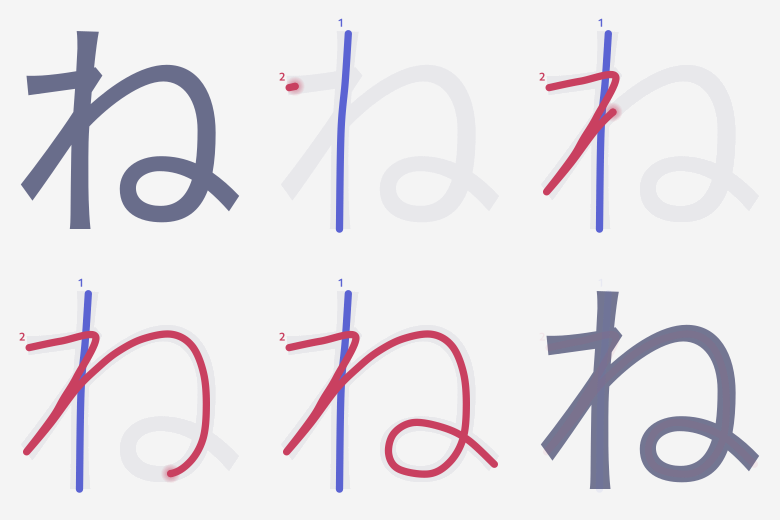
ね (ne)
Произношение
Знак ね обозначает слог «нэ», мягкое «н», за которым следует «э» как в «эта». Часть ряда な. Внимание: ね, れ и わ имеют схожую левую часть, но различаются справа — у ね закрытая петля, у れ нет петли, у わ другая правая кривая.
Пошаговое руководство по штрихам
ね пишется в две черты. Черта 1: короткая вертикальная линия слева, слегка наклонённая. Черта 2: длинная плавная изогнутая черта, которая начинается справа сверху, идёт вниз через середину, образует маленькую закрытую петлю в правом нижнем углу и заканчивается небольшим хвостиком вверх. Закрытая петля визуально отличает ね от れ и わ.
Распространённые слова с ね
- あね (ane) — старшая сестра
- いね (ine) — рисовое растение
- かね (kane) — колокол / звон
- きつね (kitsune) — лиса
- ね (ne) — корень
- ねこ (neko) — кошка / кот
- ねつ (netsu) — жар / температура
- はね (hane) — перо / пух
- ふね (fune) — корабль / лодка
- ほね (hone) — кость
- みね (mine) — вершина / гребень
- むね (mune) — грудь
- おかね (okane) — деньги
- かきね (kakine) — изгородь / забор
- つねに (tsuneni) — всегда / постоянно
- ていねい (teinei) — вежливый / учтивый
- めがね (megane) — очки
- やね (yane) — крыша
- ねつれつ (netsuretsu) — страстный / пылкий
- ねばり (nebari) — липкость / вязкость
How to Write ね (ne) in Hiragana
The hiragana character ね is romanized as "ne" and is written with 2 strokes. Like "ne" in "net". Example word: ねこ (neko) — cat.
Stroke Order for ね
When writing ね, follow the numbered stroke order shown in the reference character above. Japanese characters are generally written from left to right and top to bottom. Correct stroke order improves readability and writing speed.
Practice Tips
- Print this sheet on standard 8.5" × 11" letter paper
- Start by tracing the light grey guide characters in the first column
- Then practice writing ね freehand in the empty squares
- Pay attention to stroke direction and order — follow the numbered guide
- For interactive practice with animations, visit the main study page
About Hiragana
Hiragana is one of the three Japanese writing systems. It consists of 46 basic characters, each representing a syllable. Hiragana is used for native Japanese words, grammar particles, and verb endings. Learning correct stroke order is essential for proper Japanese handwriting.