う (u)
Pengucapan
Karakter う mewakili bunyi vokal 'u', diucapkan seperti 'oo' dalam kata 'food' tetapi dengan bibir yang rileks, tidak dibulatkan. Ini adalah salah satu dari lima vokal dasar Jepang. Bunyinya singkat dan agak terkompresi — 'u' dalam bahasa Jepang lebih terpusat dibandingkan 'oo' dalam bahasa Inggris.
Panduan Tiap Guratan
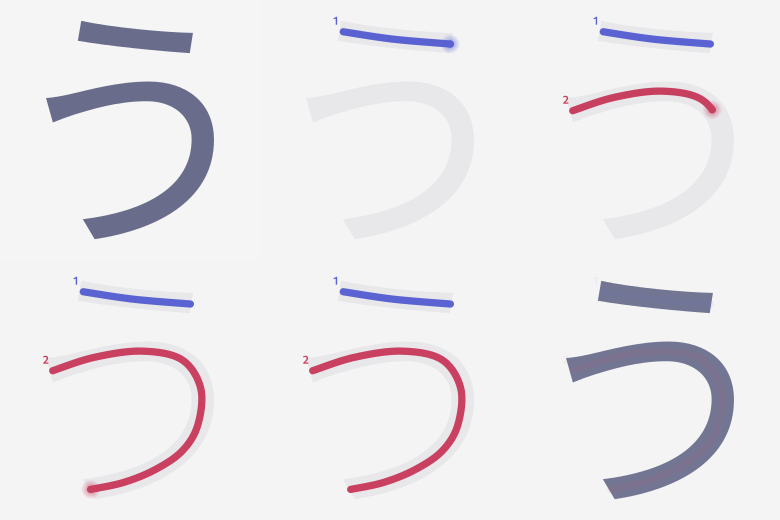
う ditulis dalam dua guratan. Guratan 1: tanda horizontal pendek yang sedikit melengkung di bagian atas, seperti titik kecil atau aksen. Guratan 2: lengkungan menyapu yang dimulai di kiri atas, turun ke tengah bawah, dan melengkung ke kanan dengan ekor naik lembut. Lengkungan bawah adalah ciri khasnya — jaga agar tetap halus, bukan bersudut.
Kata Umum dengan う
- うりあげ (uriage) — penjualan
- かわいそう (kawaisou) — kasihan
- ようか (youka) — tanggal 8
- しゃりょう (sharyou) — kendaraan
- ごう (gou) — nomor / edisi
- うし (ushi) — sapi
- うそ (uso) — kebohongan
- うた (uta) — lagu / nyanyian
- うち (uchi) — dalam / rumah
- おとうと (otouto) — adik laki-laki
- とう (tou) — menara
- とうげ (touge) — celah pegunungan
- うで (ude) — lengan
- どう (dou) — tubuh / batang tubuh
- のう (nou) — otak
- ふう (fuu) — segel / penutupan
- ぼう (bou) — tongkat / batang
- いもうと (imouto) — adik perempuan
- うま (uma) — kuda
- うみ (umi) — laut / samudra
How to Write う (u) in Hiragana
The hiragana character う is romanized as "u" and is written with 2 strokes. Like "oo" in "food", but with unrounded lips. Example word: うみ (umi) — sea.
Stroke Order for う
When writing う, follow the numbered stroke order shown in the reference character above. Japanese characters are generally written from left to right and top to bottom. Correct stroke order improves readability and writing speed.
Practice Tips
- Print this sheet on standard 8.5" × 11" letter paper
- Start by tracing the light grey guide characters in the first column
- Then practice writing う freehand in the empty squares
- Pay attention to stroke direction and order — follow the numbered guide
- For interactive practice with animations, visit the main study page
About Hiragana
Hiragana is one of the three Japanese writing systems. It consists of 46 basic characters, each representing a syllable. Hiragana is used for native Japanese words, grammar particles, and verb endings. Learning correct stroke order is essential for proper Japanese handwriting.