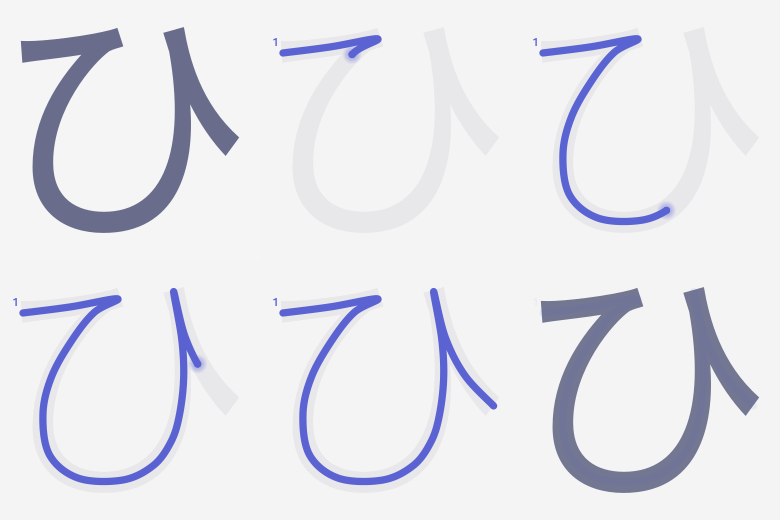
ひ (hi)
Pengucapan
Karakter ひ mewakili suku kata 'hi', bunyi 'h' lembut diikuti 'i'. Bagian dari baris は. Dalam ucapan cepat, 'h' sebelum 'i' bisa terdengar sedikit lebih berhembus daripada 'h' dalam bahasa Inggris.
Panduan Tiap Guratan
ひ ditulis dalam satu guratan. Mulai di kiri atas dengan goresan ke bawah pendek, lalu sapu turun dan ke kanan dalam garis melengkung panjang yang membusur melewati bagian bawah karakter, akhirnya naik ke kanan atas dan berakhir dengan kait kecil. Bentuknya menyerupai senyuman atau mangkuk dangkal.
Kata Umum dengan ひ
- ひゃく (hyaku) — seratus
- ひとり (hitori) — satu orang
- ひとりごと (hitorigoto) — berbicara sendiri
- ひ (hi) — hari
- ひがし (higashi) — timur
- ひつじ (hitsuji) — domba / biri-biri
- ひとみ (hitomi) — pupil mata
- ひま (hima) — waktu luang
- てのひら (tenohira) — telapak tangan
- ひかり (hikari) — cahaya
- ひだり (hidari) — kiri
- ひる (hiru) — siang hari
- ひょう (hyou) — suara (pemungutan) / kartu suara
- ひざ (hiza) — lutut
- ひと (hito) — orang
- ひん (hin) — keanggunan / kelas
- あさひ (asahi) — matahari pagi
- ずいひつ (zuihitsu) — esai / tulisan ringan
- ぜひ (zehi) — pasti / harus
- たいひ (taihi) — kontras / perbandingan
How to Write ひ (hi) in Hiragana
The hiragana character ひ is romanized as "hi" and is written with 1 stroke. Like "hee" in "heat". Example word: ひと (hito) — person.
Stroke Order for ひ
When writing ひ, follow the numbered stroke order shown in the reference character above. Japanese characters are generally written from left to right and top to bottom. Correct stroke order improves readability and writing speed.
Practice Tips
- Print this sheet on standard 8.5" × 11" letter paper
- Start by tracing the light grey guide characters in the first column
- Then practice writing ひ freehand in the empty squares
- Pay attention to stroke direction and order — follow the numbered guide
- For interactive practice with animations, visit the main study page
About Hiragana
Hiragana is one of the three Japanese writing systems. It consists of 46 basic characters, each representing a syllable. Hiragana is used for native Japanese words, grammar particles, and verb endings. Learning correct stroke order is essential for proper Japanese handwriting.