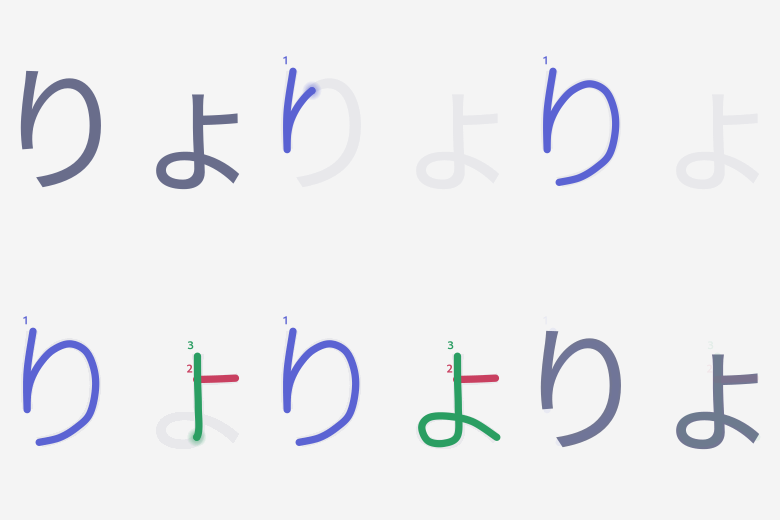
りょ (ryo)
Pronunciación
El carácter compuesto りょ representa la sílaba 'ryo', formada por combinación de り (ri) con un ょ pequeño. Se pronuncia como una sola sílaba 'ryo'.
Guía trazo por trazo
りょ se escribe en tres trazos: uno para り más dos para el ょ pequeño. El ょ pequeño se encaja en el área inferior derecha junto a り.
Palabras comunes con りょ
- しゃりょう (sharyou) — vehículo
- りょう (ryou) — residencia / dormitorio
- あつりょく (atsuryoku) — presión
- いりょう (iryou) — atención médica
- えんりょ (enryo) — reserva / consideración
- かくりょう (kakuryou) — ministros del gabinete
- かんりょう (kanryou) — finalización / conclusión
- きゅうりょう (kyuuryou) — salario / sueldo
- きょうりょく (kyouryoku) — cooperación / colaboración
- こうりょ (kouryo) — consideración
- こうりょく (kouryoku) — eficacia / validez
- ざいりょう (zairyou) — materiales / ingredientes
- しゅうりょう (shuuryou) — fin / conclusión
- しりょう (shiryou) — datos / material
- じつりょく (jitsuryoku) — capacidad real / aptitud
- せいりょく (seiryoku) — influencia / poder
- ぜんりょく (zenryoku) — todas las fuerzas / máximo esfuerzo
- たいりょう (tairyou) — gran cantidad
- たいりょく (tairyoku) — fuerza física / resistencia
- ちりょう (chiryou) — tratamiento / terapia
How to Write りょ (ryo) in Hiragana
The hiragana character りょ is romanized as "ryo" and is written with 3 strokes. "R" + "yo" blended — tongue tap + yo. Example word: りょこう (ryokou) — travel.
Stroke Order for りょ
When writing りょ, follow the numbered stroke order shown in the reference character above. Japanese characters are generally written from left to right and top to bottom. Correct stroke order improves readability and writing speed.
Practice Tips
- Print this sheet on standard 8.5" × 11" letter paper
- Start by tracing the light grey guide characters in the first column
- Then practice writing りょ freehand in the empty squares
- Pay attention to stroke direction and order — follow the numbered guide
- For interactive practice with animations, visit the main study page
About Hiragana
Hiragana is one of the three Japanese writing systems. It consists of 46 basic characters, each representing a syllable. Hiragana is used for native Japanese words, grammar particles, and verb endings. Learning correct stroke order is essential for proper Japanese handwriting.