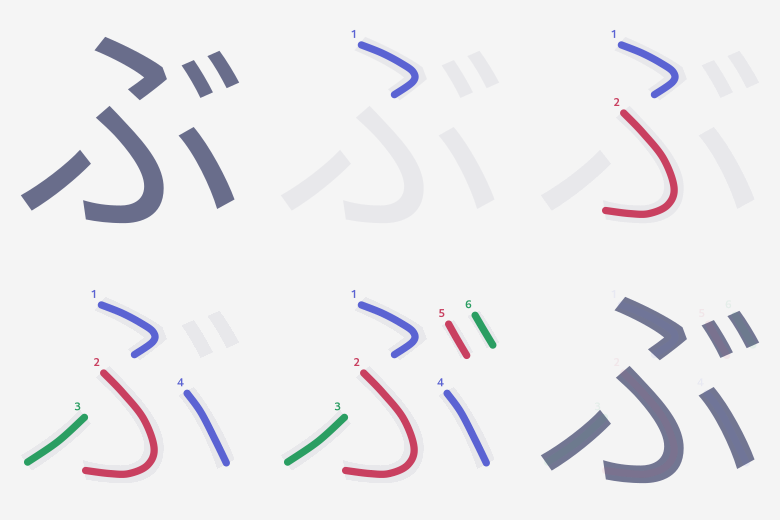
ぶ (bu)
Pronunciación
El carácter ぶ representa la sílaba 'bu', una 'b' suave seguida de 'u'. Es ふ con el dakuten que sonoriza 'f' a 'b'.
Guía trazo por trazo
ぶ se escribe en seis trazos. Los primeros cuatro trazos son idénticos a ふ (pequeño acento arriba, trazo curvo debajo, dos pequeñas marcas separadas en la parte inferior). Luego se añade el dakuten: Trazo 5: una pequeña marca diagonal en la parte superior derecha del carácter. Trazo 6: una segunda pequeña marca diagonal debajo o a la derecha de la primera. Las dos marcas sonorizan la sílaba de 'fu' a 'bu'.
Palabras comunes con ぶ
- ごぶさた (gobusata) — mucho tiempo sin contacto
- かぶ (kabu) — acción / valor
- つぶ (tsubu) — grano / partícula / gota
- ぶた (buta) — cerdo
- あぶら (abura) — aceite / grasa
- どんぶり (donburi) — donburi (cuenco grande de porcelana)
- ぶん (bun) — oración / frase
- かぶしき (kabushiki) — acción / participación
- こうぶつ (koubutsu) — mineral
- さけぶ (sakebu) — gritar
- せいぶつ (seibutsu) — ser vivo / organismo
- だいぶつ (daibutsu) — gran estatua de Buda
- とぶ (tobu) — volar
- どうぶつ (doubutsu) — animal
- はこぶ (hakobu) — llevar / transportar
- ぶき (buki) — arma
- ぶし (bushi) — samurái / guerrero
- ぶじ (buji) — a salvo / seguro
- ぶそう (busou) — armamento
- ぶたい (butai) — escenario
How to Write ぶ (bu) in Hiragana
The hiragana character ぶ is romanized as "bu" and is written with 6 strokes. Like "boo" in "book". Example word: ぶんか (bunka) — culture.
Stroke Order for ぶ
When writing ぶ, follow the numbered stroke order shown in the reference character above. Japanese characters are generally written from left to right and top to bottom. Correct stroke order improves readability and writing speed.
Practice Tips
- Print this sheet on standard 8.5" × 11" letter paper
- Start by tracing the light grey guide characters in the first column
- Then practice writing ぶ freehand in the empty squares
- Pay attention to stroke direction and order — follow the numbered guide
- For interactive practice with animations, visit the main study page
About Hiragana
Hiragana is one of the three Japanese writing systems. It consists of 46 basic characters, each representing a syllable. Hiragana is used for native Japanese words, grammar particles, and verb endings. Learning correct stroke order is essential for proper Japanese handwriting.